
My Third Heart Attack: What Unmanaged Grief Can Do to the Body
A Lesson in Listening to Your Body Before It's Too Late
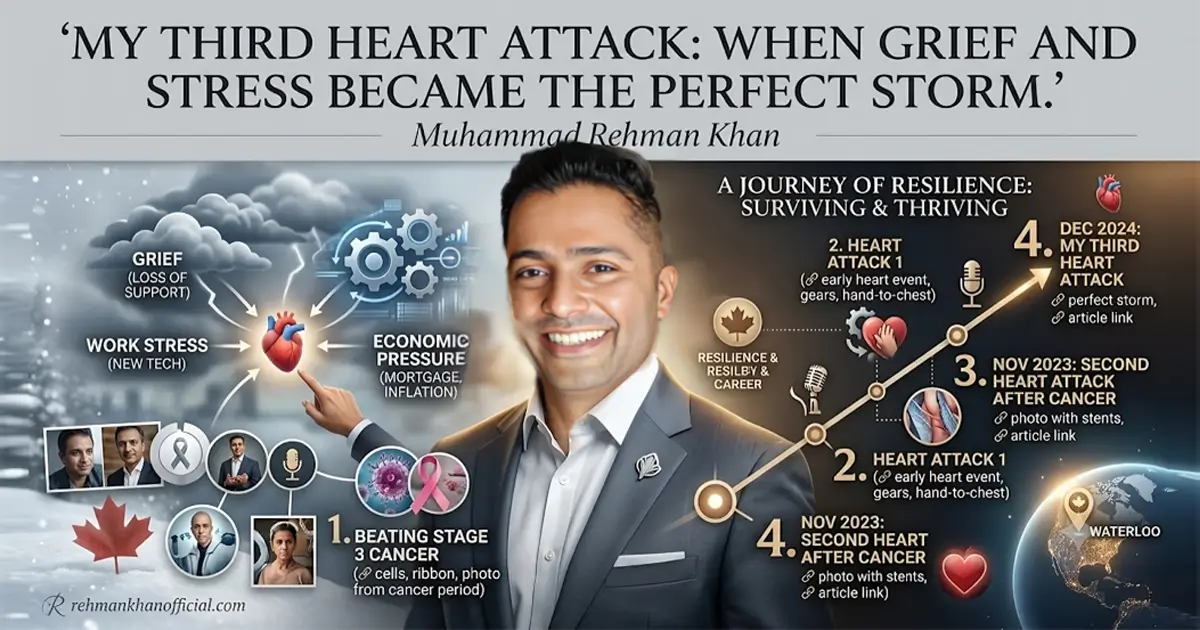
After my second heart attack, two more medical stents were surgically inserted into my arteries. My body was sending a clear, undeniable message.
That second cardiovascular crisis had occurred in November 2023, leaving me physically shaken but deeply determined to recover and turn my life around.
Yet, less than thirteen months later, in December 2024, I would find myself staring at the ceiling of an emergency room, facing a devastating third heart attack.
At the time, navigating the regular, fast-paced rhythms of daily life, I had absolutely no idea how quickly everything would alter once again.
This time, the psychological stress and anxiety felt distinctly different. It was heavier, deeply personal, and ultimately, an overwhelming force that my body could no longer absorb.
Understanding the Medical Background
To truly understand the structural impact of surviving multiple heart attacks, it is essential to look at the severe health crises that paved the way. My body had already been through a war before this storm arrived:
- The Foundation: Discover how surviving a life-threatening oncological battle shaped my physiological landscape by reading about Beating Stage 3 Cancer.
- The Escalation: Understand the immediate cardiovascular precursors detailed in my account of the Second Heart Attack After Cancer.
Initially, following that second attack, I made a strict promise to myself. I vowed to fix my dietary choices, optimize my sleep schedule, and aggressively minimize unnecessary pressure.
For a period, I followed through diligently. But life does not always cooperate with our personal resolutions, and old habits are easy to slip back into when the world around you speeds up.
The Pressure Begins to Build Before My Third Heart Attack
At work, the operational landscape was evolving rapidly. My organization started taking on new clients, executing massive projects, and implementing complex technologies.
The underlying corporate pressure slowly, almost invisibly, began building again.
Even though my manager was exceptionally supportive and understanding, the commercial reality remains simple: corporations exist for business. The work must be executed.
I threw myself into learning new systems, spending consecutive hours in intense technical training.
Simultaneously, societal economic weights shifted. Taxes were rising, mortgage payments were escalating, and inflation was eating into our everyday livelihood. The subconscious stress of providing and succeeding was compounding.
I convinced myself I was managing perfectly. I kept entertaining family and friends with stand-up comedy. I sustained my regular job performance. I kept singing, and I actively played competitive sports.
On the surface, everything felt completely under control.
But somewhere underneath the smiles and the activity, profound work stress was quietly accumulating. I was masking my exhaustion with productivity, and I simply did not see the breaking point approaching.
This was the silent, invisible path to my third heart attack.
The Phone Call That Changed Everything
Then, during a cold winter day, I went to play a match of indoor cricket. As I always do, I was actively trying to stay happy, joyful, and physically fit.
During the game, one of my friends unexpectedly received a phone call. Someone from back home urgently wanted to relay an important message to me.
I was immediately surprised. No one would normally interrupt me with a call if they already knew I had gone to play sports. I walked off the pitch to take the message.
"Your mother-in-law has passed away."
I literally felt like someone had violently pulled the ground from beneath my feet. In that exact moment, I was completely paralyzed, having no idea what to do or how to process the words.
After losing my own parents, my mother-in-law had become one of the absolute strongest sources of emotional and structural support in my life.
She had stood firmly beside me through complex, grueling cancer treatments. She was there through the terrifying aftermath of my previous heart attacks, the financial uncertainty, and my physical recovery.
She helped me quietly on countless occasions and remained perpetually concerned about my health and well-being.
Her profound kindness never demanded recognition. She simply showed up whenever human support was needed. Her sudden passing was the most catastrophic psychological shock I had experienced since the loss of my own parents.
For days, I was overwhelmed with grief, stress, and anxiety. My family was devastated. My wife's family was devastated. Her passing left an emptiness that words cannot fully describe.
This profound and unexpected loss directly set the stage for my third heart attack.
Are You Navigating Continuous Health Challenges?
I have built an extensive documentation of my survivals, educational paths, and resilience tactics to help others heal. You don't have to navigate this alone.
Explore My Complete Journey MapWhat Happens When Everything Collapses
In the heavy, darkened days following her passing, my defensive routines started falling apart completely. The promises I made to myself were forgotten.
My diet degraded into whatever was fast and easy. My sleep hygiene became non-existent as grief kept my mind racing through the night.
The sheer volume of emotional pain was fundamentally overwhelming.
Concurrently, professional work demands never paused. The world kept spinning, oblivious to my private devastation.
The acute emotional anxiety from the profound loss and the chronic pressure from my career combined into one crushing, inescapable burden.
Every biological defense mechanism that protects a healthy heart collapsed at the exact same time.
A few days later, my body finally succumbed, and I suffered my third heart attack.
This time, the visceral experience felt entirely different. I already knew the clinical warning signs. I was taking my prescribed cardiac medications perfectly. I was actively trying to mitigate emotional stress.
But the human body can only carry a certain amount of psychological and physical cargo before it demands absolute attention.
Understanding heart attack survival rates made me realize just how fortunate I was to survive my third heart attack. The statistics are sobering, and I had beaten the odds multiple times now.
Key Lessons from My Third Heart Attack
I am sharing this vulnerable milestone not to induce fear, but to offer vital documentation to help you survive. If even one person reads this analysis and implements an immediate lifestyle pivot, then my survival carries a deeper, life-saving meaning.
Grief Is Not Separate from Physical Health
We routinely separate emotional trauma from physiological health, treating them as two different problems. But they are profoundly interconnected. The immense loss of my mother-in-law created acute, physical stress that my cardiovascular system simply could not process. Do not ignore grief. It alters your cardiovascular markers, blood pressure, and heart rate in real, measurable ways. This was a major contributing factor to my third heart attack.
Work Stress Cumulative Effects Are Silent
I foolishly believed I was handling everything because I was still working, laughing, and playing sports. But underneath the psychological hood, the pressure was compiling dangerously. Masking your stress with constant activity is deceptive and destructive. By the time the internal indicators spiked, it was already too late to prevent the event manually. The hidden stress nearly made my third heart attack fatal.
Winter Weather is a Distinct Risk Factor
I need to state this clearly: all three of my heart attacks occurred during the winter season. Cold weather naturally constricts blood vessels and places additional thermal and physical strain on the heart. If you possess an established history of cardiovascular disease, you must be exceptionally careful when ambient temperatures drop. The freezing temperatures were a direct contributing trigger for my third heart attack.
Clinical Knowledge Alone Will Not Save You
This was the hardest truth to accept. You can know exactly what is coming, take all your pills, and still fall directly into it. I possessed the warning signs, took my medication, and tried to prevent stress. But theoretical knowledge isn't enough. You require systemic boundaries, active support structures, and professional help to break the cycle of stress escalation. That harsh reality is precisely why my third heart attack still happened despite my complete awareness.
Self-Assessment: Is Invisible Stress Threatening Your Health?
Check the factors below that align with your lifestyle right now. If you select 2 or more, it is a critical warning sign to slow down.
The Aftermath of My Third Heart Attack: What Finally Changed
After surviving my third heart attack, something foundational inside my consciousness shifted permanently.
My first heart attack taught me fear. My second heart attack taught me acute awareness. This third heart attack taught me absolute acceptance.
I finally internalized the reality that life cannot be perfectly controlled. We can eat clean, we can exercise, we can plan strategically, and we can work exceptionally hard. But catastrophic events, sudden losses, and emotional shocks can still arrive entirely without warning.
For years, I kept asking myself a victimizing, exhausting question: "Why is this happening to me?"
After my third heart attack, lying in recovery, I pivoted to a far more powerful inquiry: "What can I learn from this?"
That single cognitive shift altered everything. Instead of focusing on what had been stripped away, I began focusing intentionally on what remained: my core faith, my beautiful family, my surviving health, and my capacity to serve and educate others.
For the first time in many years, I felt a genuine sense of peace. Not because my problems disappeared, but because I stopped fighting battles that were completely beyond my control.
Surviving my third heart attack gave me a profound clarity I had never possessed before.
Where I Am Now After My Third Heart Attack
I survived my third heart attack. I am still here. I am still working. I am still serving communities, and most importantly, I am still actively learning.
Every challenge I faced left behind a vital lesson, and those lessons continue to shape how I live, how I work, and how I support others today.
Today, living in Waterloo, Canada, I continue navigating my professional career while speaking directly to audiences globally regarding emotional resilience and systemic health tracking.
I am not perfect. I still face stress and daily challenges. But now, I know with absolute certainty that my health must come first.
Because if I am not here, I cannot help anyone else.
A Direct Message to You: Take Action Today
If you are reading this while navigating intense professional stress, profound loss, or a looming health crisis, please hear me. You are not alone, but you must act:
- Listen to your body: It is constantly sending subtle signals. Listen before it screams.
- Build a support framework: Do not rely purely on willpower. Talk honestly about your cumulative stress with professionals and loved ones.
- Manage environmental triggers: Take extra cardiovascular precautions during cold winter months.
- Honor your grief: Treat emotional healing with the exact same urgency as a medical prescription.
Do not wait until a third heart attack forces your hand. Do not wait until the ground is pulled from under your feet. Start making deliberate changes today.
To learn more about the complete trajectory of my medical battles, survival frameworks, and professional history, you can access my comprehensive background details directly:
Read My Full Biography & JourneyFrequently Asked Questions About My Third Heart Attack
Q. Can emotional grief and stress trigger a third heart attack?
Yes, absolutely. Deep emotional trauma, such as the sudden loss of a loved one, combined with chronic workplace anxiety, floods the body with stress hormones like cortisol and adrenaline.
This "perfect storm" spikes blood pressure, increases heart rate, and can cause arterial inflammation or spasms, directly triggering a subsequent cardiac event in vulnerable individuals.
This is precisely what happened during my third heart attack.
Q. Can you have a heart attack even if you are taking all your medications?
Unfortunately, yes. While medications like beta-blockers, statins, and blood thinners are critical for managing physical risks, they cannot entirely block the severe physiological impact of extreme, sudden emotional grief or compounded physical exhaustion.
Clinical knowledge and medication must be paired with active lifestyle and emotional stress management. I learned this harsh reality through my third heart attack.
Q. Why does winter weather increase the risk of multiple heart attacks?
Cold temperatures cause blood vessels to constrict (vasoconstriction) to preserve body heat. This narrowing increases blood pressure and forces the heart to work significantly harder to pump oxygen throughout the body.
For individuals with existing stents or a history of heart disease, this seasonal strain dramatically elevates the risk of a coronary blockage. Winter was a factor in my third heart attack, just as it was in the previous two.
Q. What are the hidden signs of stress before a heart attack?
Hidden signs often look like extreme productivity or masking. These include compensating for grief by constantly working or playing sports, experiencing sudden drops in sleep duration due to racing thoughts, abandoning healthy dietary routines, and willfully ignoring minor physical flags like subtle chest pressure or unusual fatigue because you convince yourself you "feel fine."
I exhibited all these warning signs before my third heart attack.
Q. How do you mentally recover after surviving a third heart attack?
Mental recovery requires moving from fear to absolute acceptance. It involves shifting your mindset from asking victimizing questions like "Why is this happening to me?" to empowering questions like "What can I learn from this?"
Focusing on what remains—your faith, your family, and your ability to help others—allows you to stop fighting battles beyond your control and find peace. This mental shift was essential after my third heart attack.
Q. How can you break the cycle of stress if medication alone isn't enough?
Preventing further heart attacks requires a systemic lifestyle overhaul. This includes creating strict professional boundaries to manage work-related stress, optimizing sleep architecture, seeking targeted grief counseling, and establishing an active emotional support network to process trauma before it manifests physically.
These are the exact changes I implemented after my third heart attack.
Q. Where can I read the full medical history and recovery journey of Muhammad Rehman Khan?
The entire health and resilience journey—spanning from a major oncological battle to multiple cardiac survivals—is fully documented.
You can read the detailed breakdown of Beating Stage 3 Cancer and review his comprehensive academic foundations on the Education Page.